
What is Anki good for?
Our students’ strategy of studying for a test in the short term is good – for their grades. What is less good is the result that remains in the long term.
In the two weeks leading up to an exam, let’s say you have two students and they each have three hours to study. One student divides their study time into six days of thirty-minute blocks. The other student studies all of the material for three hours the night before the test. It is possible that both students will score similarly on the test the next day. However, the student who spread out their studies will recall a great deal more information than the crammer in a week, a month, or a year.
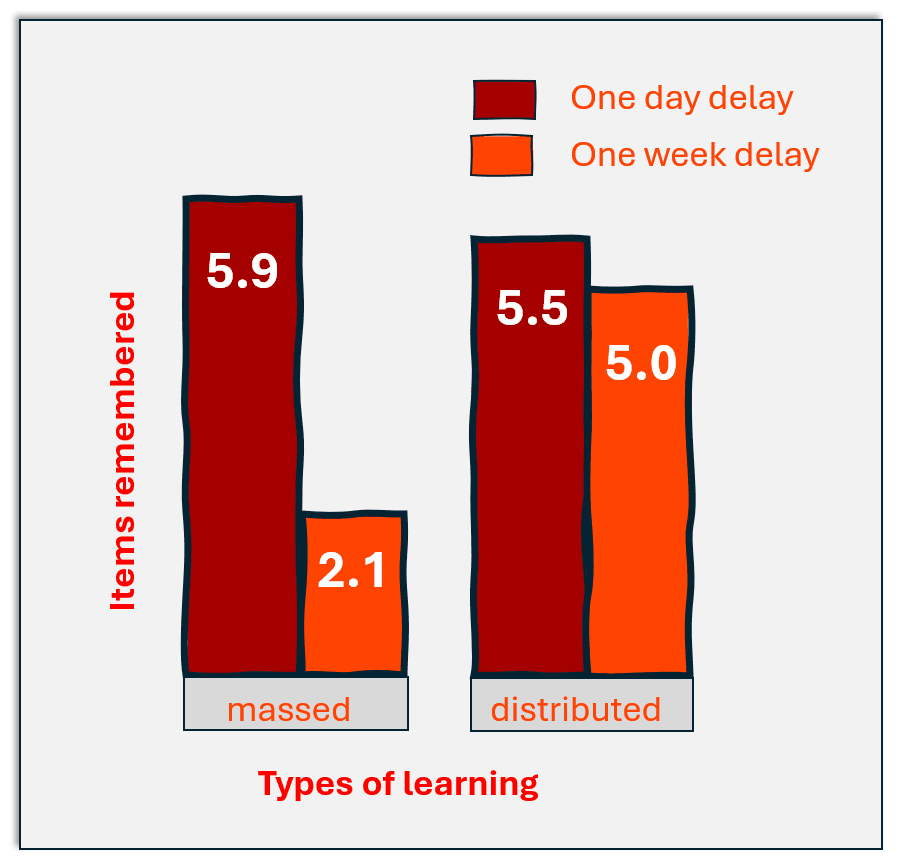
“Massed” learning means that you cram everything the night before the exam.
“One day delay” means that the student will take her exam the next day.
“One week delay” means that the student takes her exam one week after completing her preparation for the exam.
Keppel, G. (1964). Facilitation in short- and long-term retention of paired associates following distributed practice in learning. Journal of Verbal Learning and Verbal Behavior, 3(2): 91-111.
With Anki, you can get your students involved in distributed learning.