
The cross-disciplinary path to chemistry
Satellite images can be used to detect not only burned regions, but also to measure the concentration of released gases or track the direction in which smoke spreads from a fire. We will show how this data can be visualised using wildfires in boreal forests in mid-July in Siberia, Russia.
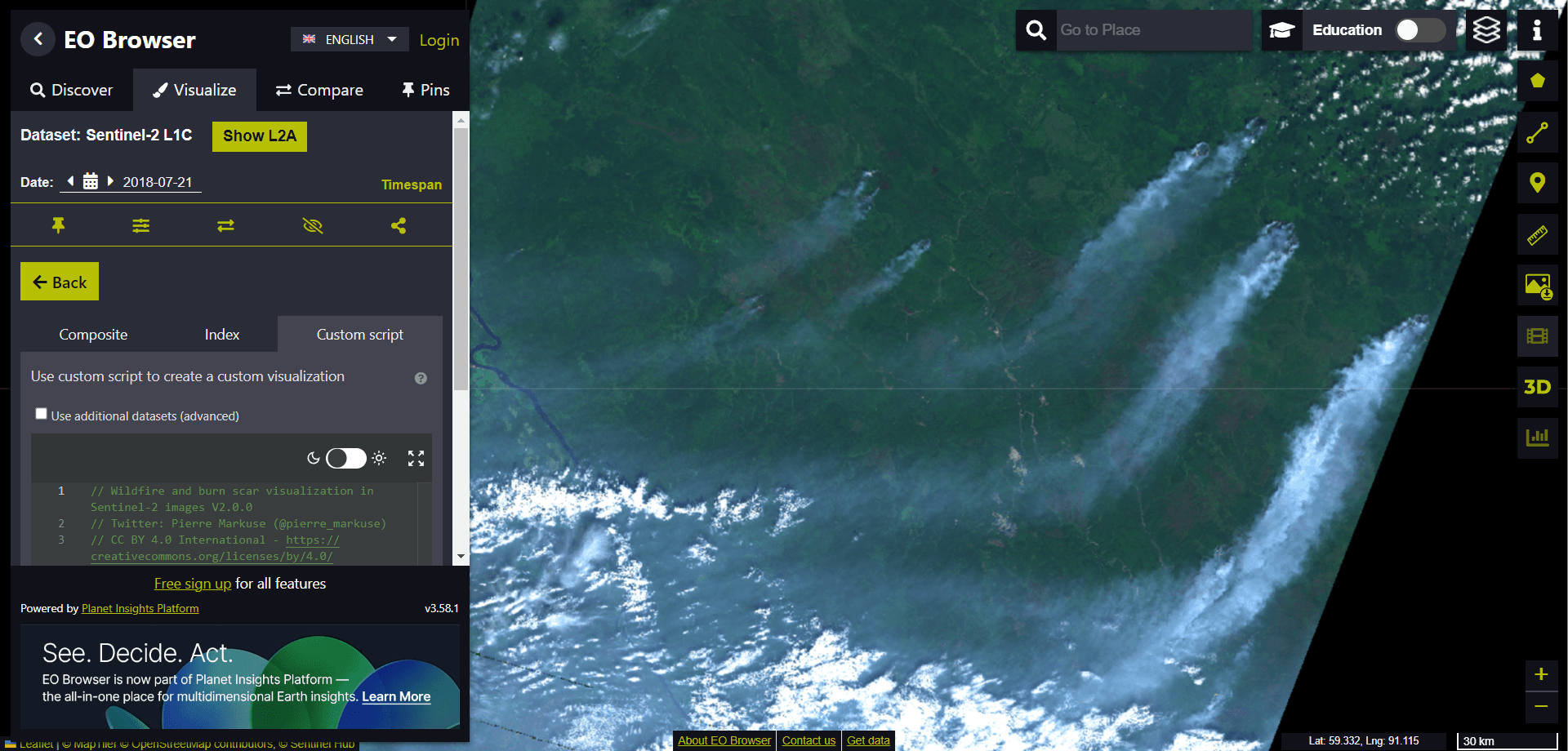
If we zoom in closer, we can easily make out the toxic gases released by the forest fires.
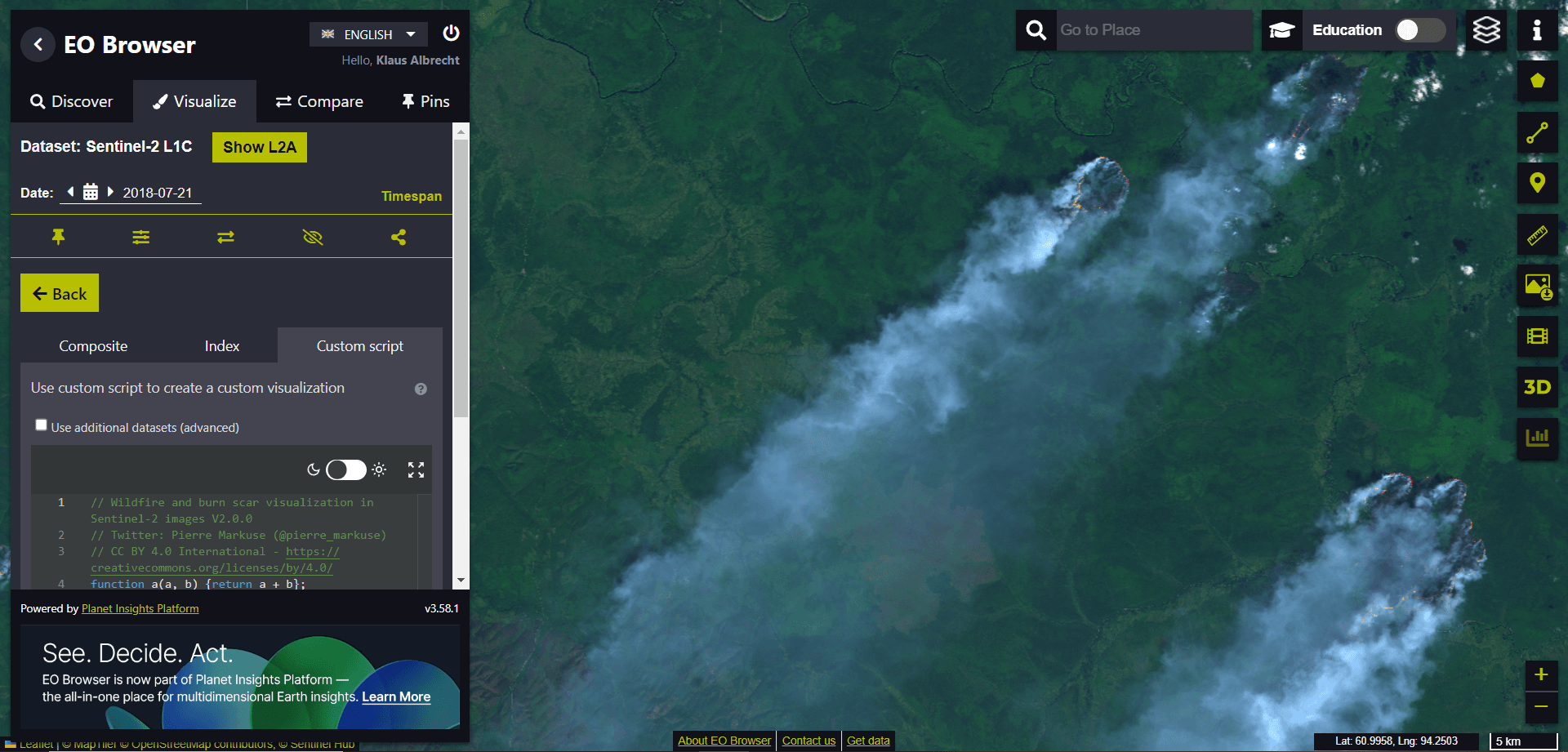
The gases released by the fires increase the concentration of carbon monoxide (CO), nitrogen oxides (NO), and other compounds in the air. Forest fires also contribute to global warming by releasing carbon dioxide (CO2) into the atmosphere.
Combustion is a chemical reaction of a substance, the so-called combustible, with oxygen as an oxidising agent. Energy is released during the reaction steps, which is dissipated as radiation (flame formation) and internal energy (heat in the exhaust gas). Without oxygen from the ambient air, there would be no combustion. The supply of oxygen to the source of the fire can develop extreme forms, such as raging firestorms that can tear down entire trees.
During combustion, a wide variety of gases are involved, which can be easily visualised with the help of visualisation software. The following website, for example, offers one possibility:
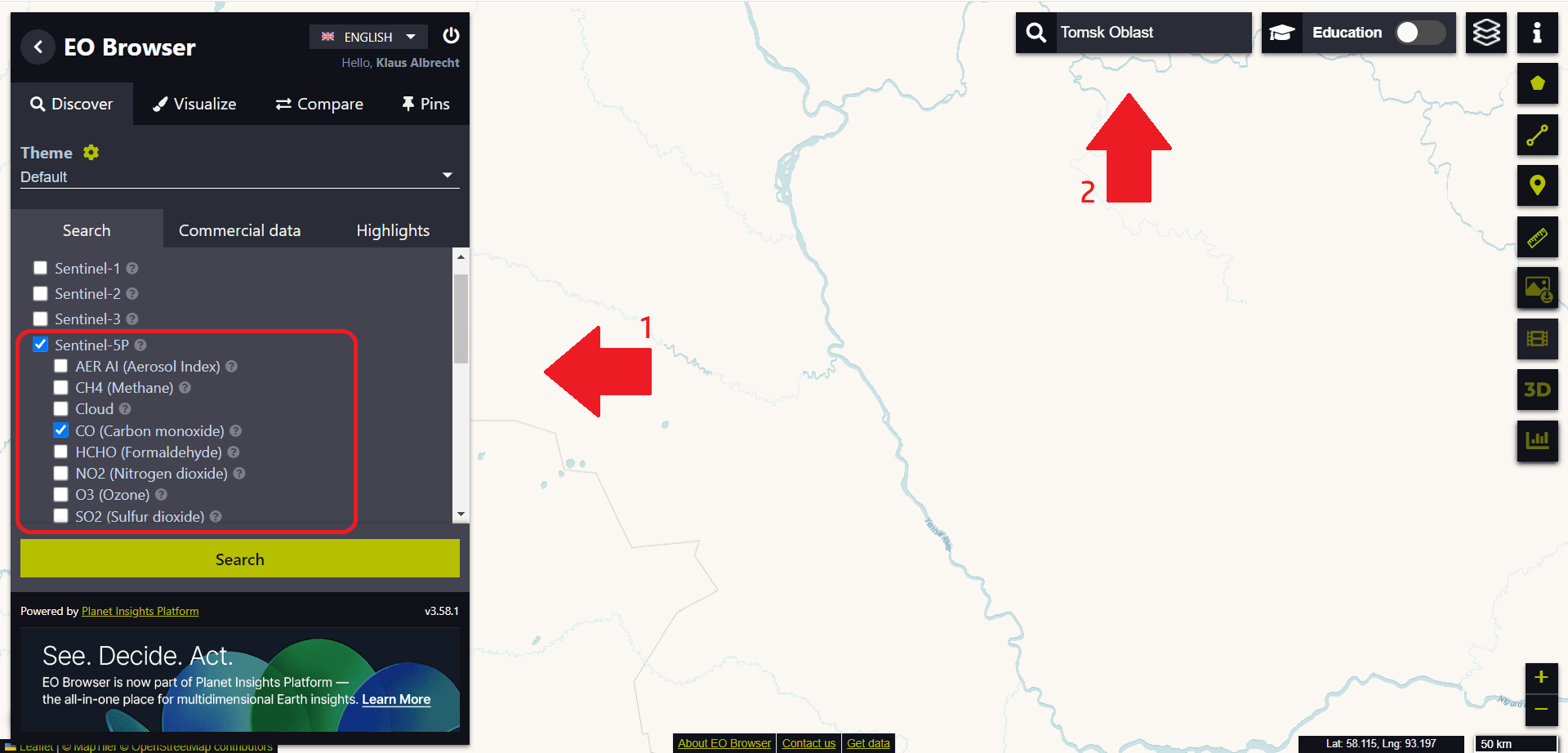
We use the data provided by Sentinel-5P to determine the concentration of the gases released.
We therefore enter “Sentinel-5P” and “CO” in the corresponding selection fields (1), and select “Tomsk Oblast” in the search field for the region (2).
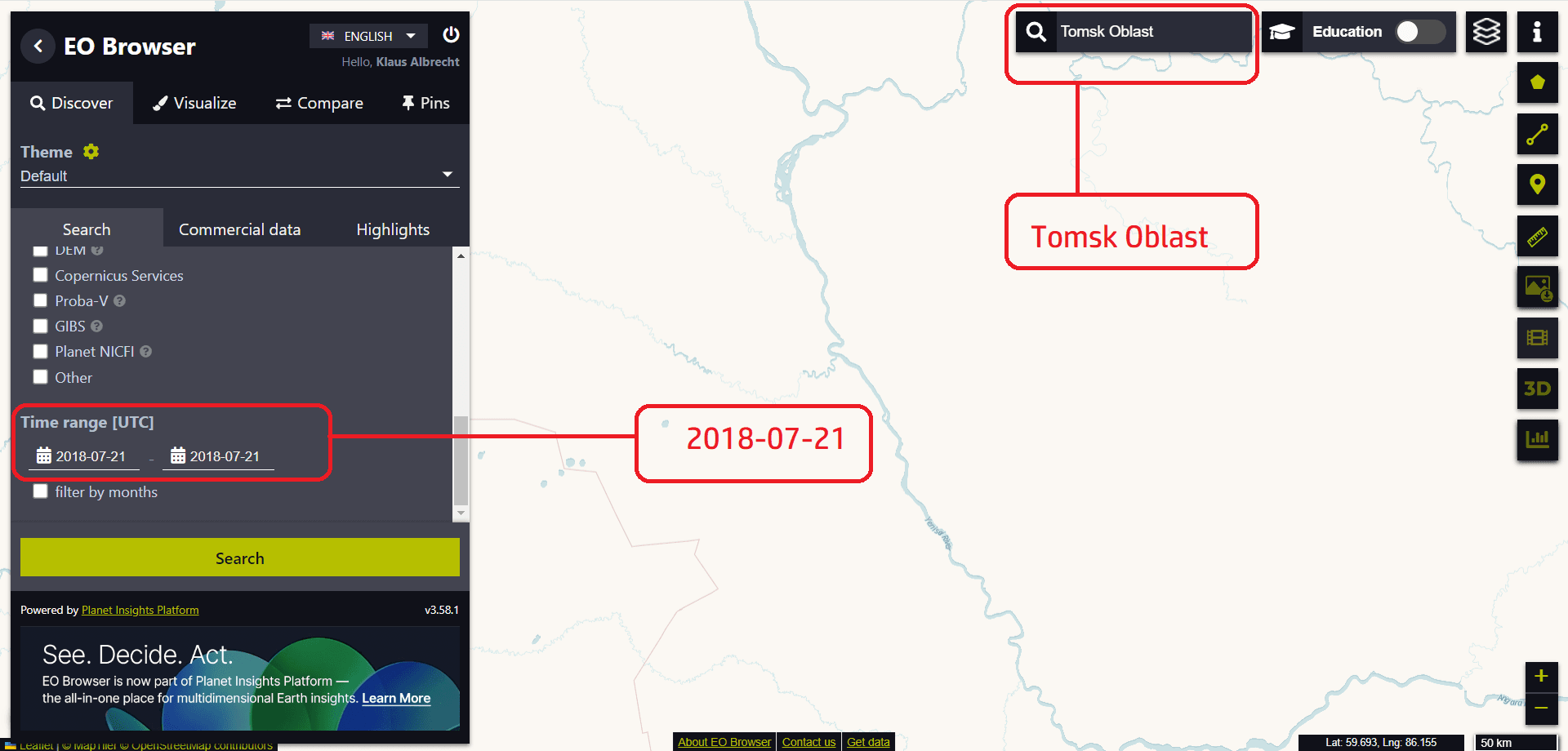
We choose 21 July 2018 as the date.
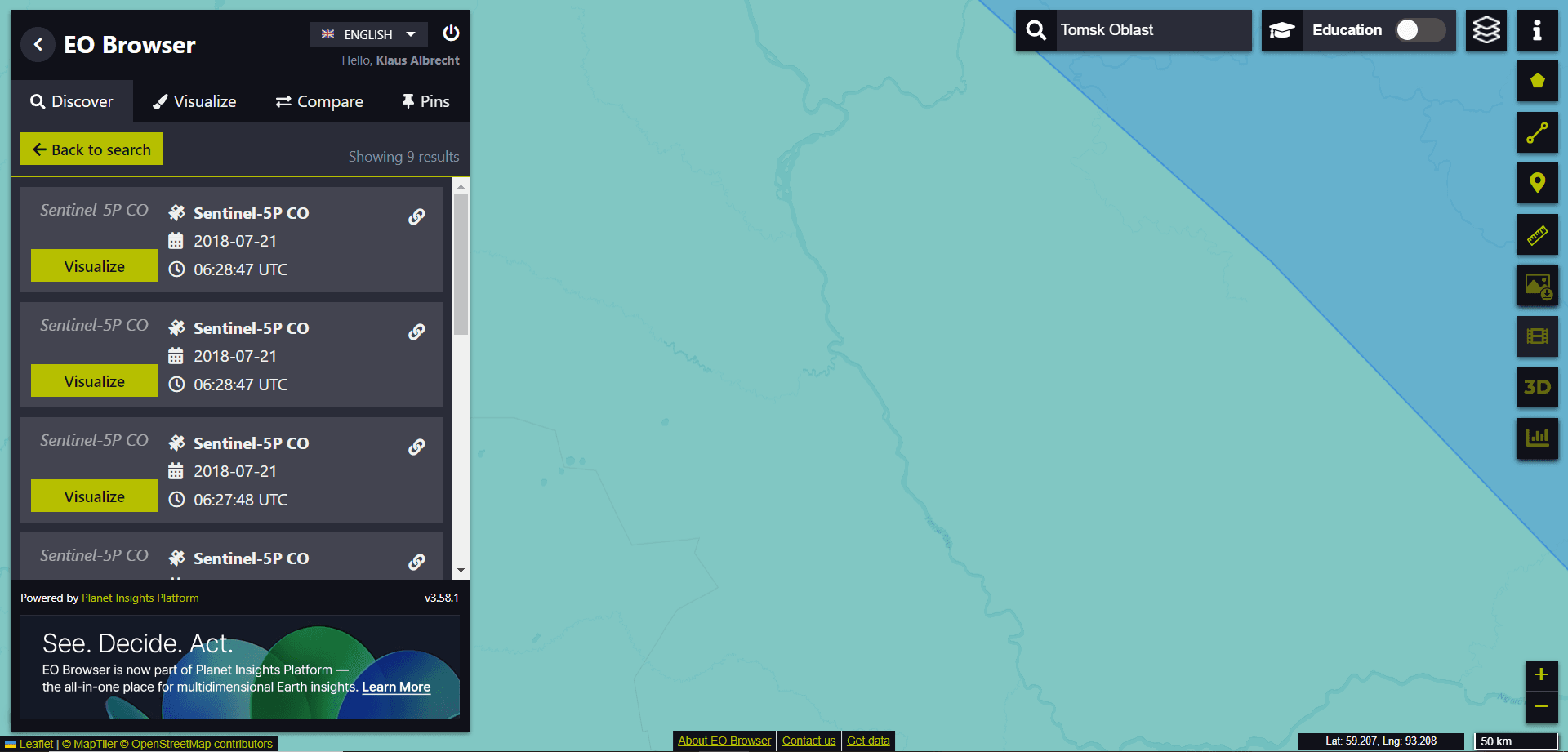
We get a list with the hits for our selection.
We visualise the dataset “Sentinel-5P CO | 2018-07-21 | 06:28:47 UTC”. In the vicinity of latitude 59.0 and longitude 93.0, we obtain the CO concentrations with a resolution of 50 km.
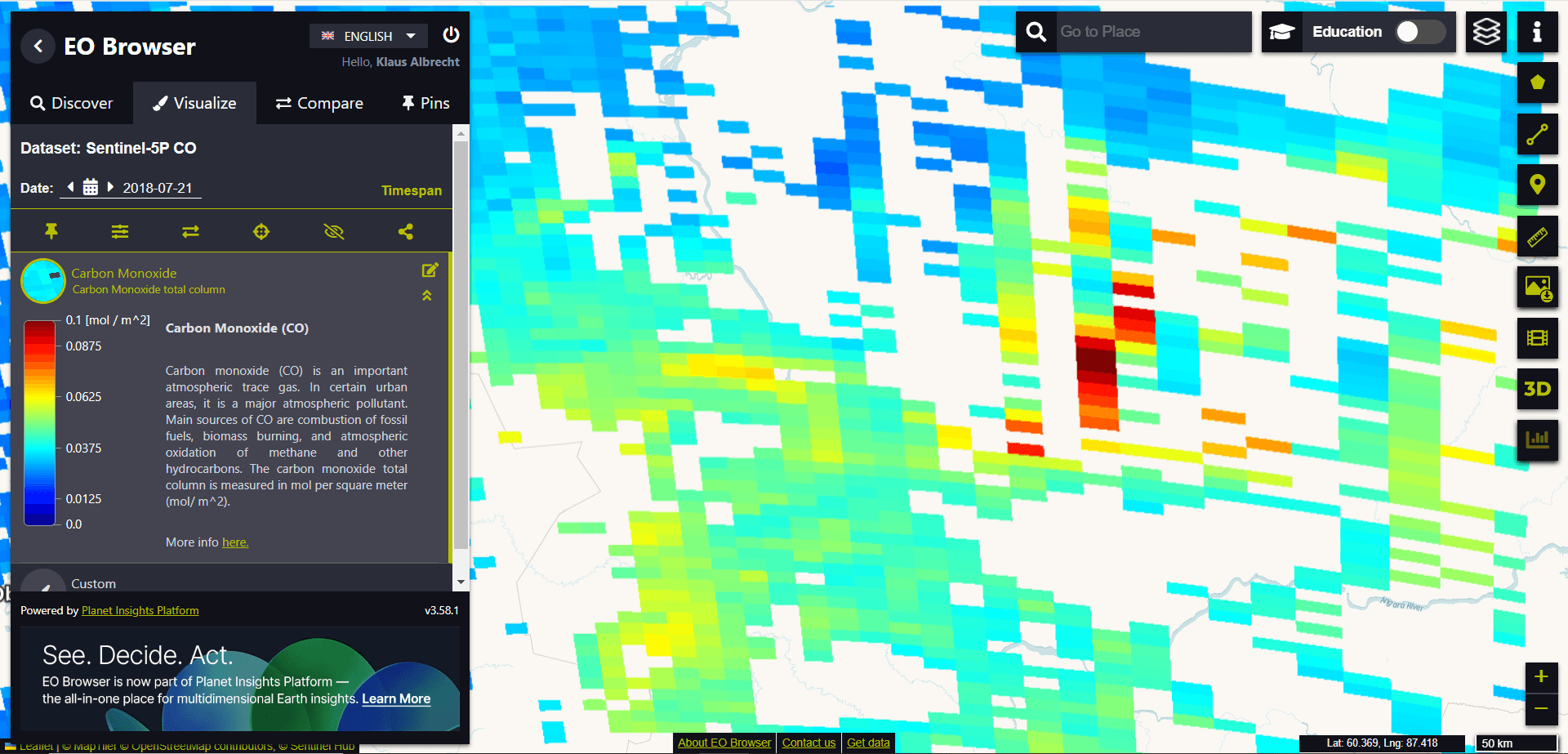
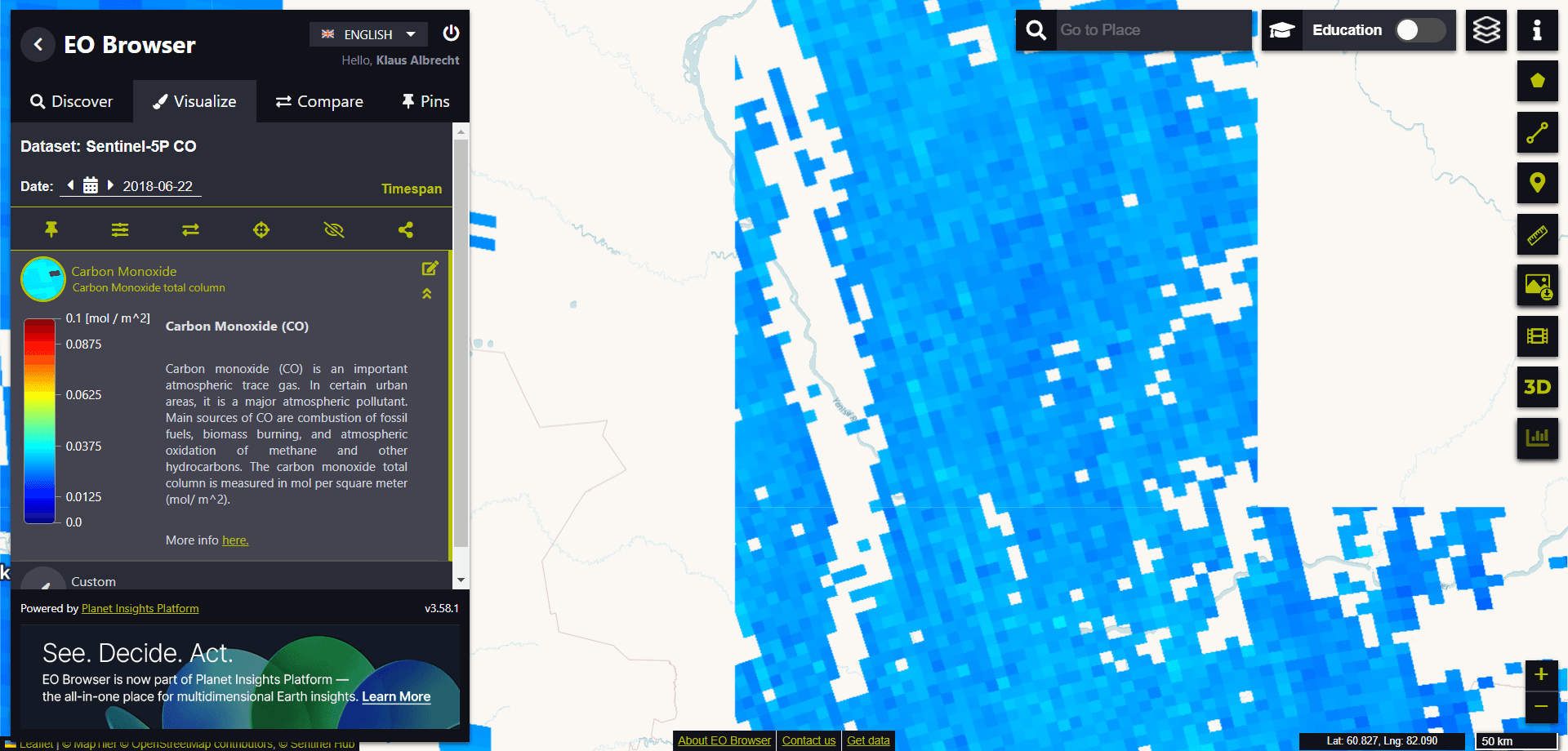
The carbon monoxide CO concentration values are given in moles per square metre – a good opportunity to talk to the students about units of measurement.
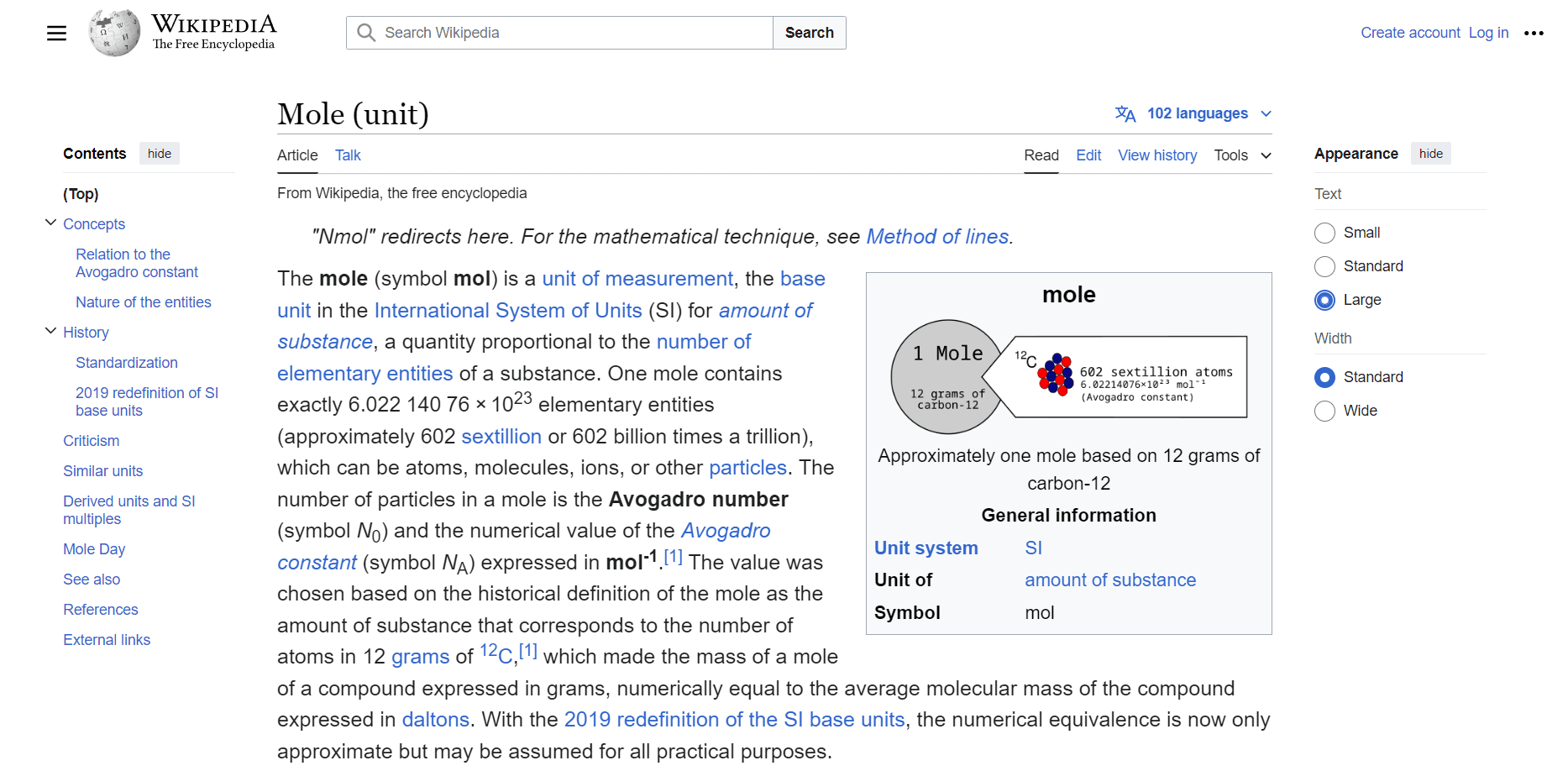
One month before the outbreak of the fires, the CO concentration in the region was low, as expected.
Finally, we should ask ourselves what we have learnt. For example, we could ask ourselves:
What could a negative dNBR mean?”
The science of learning (cognitive science) unfortunately shows us all too clearly that we simply forget many things. Our pupils are no different. This is where insights from “retrieval practice” and “spaced learning” help us. Further links on these topics can be found here:
https://www.teachingsprints.com/research-hub#retrieval
And the answer to the above question can be found out with the multiple choice question at the end of this section.