
Second example: El Niño Southern Oscillation (ENSO)
El Niño Southern Oscillation (ENSO) is a naturally occurring large-scale climatic phenomenon involving fluctuating ocean temperatures in the central and eastern equatorial Pacific, coupled with changes in the overlying atmosphere.
First, open the BLIF website (https://server2.blif.de) and this time select the satellite image via the ‘Select Satellite Image’ menu:
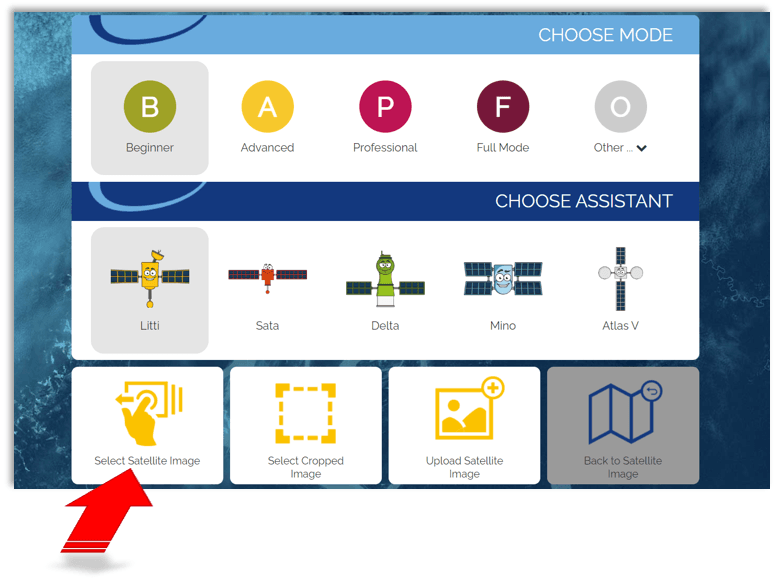
Using the filter, we search for available satellite images with the keyword ‘ENSO’ and select the first entry
(file Name: LCo8_L1TP_092089_20160221_2017):
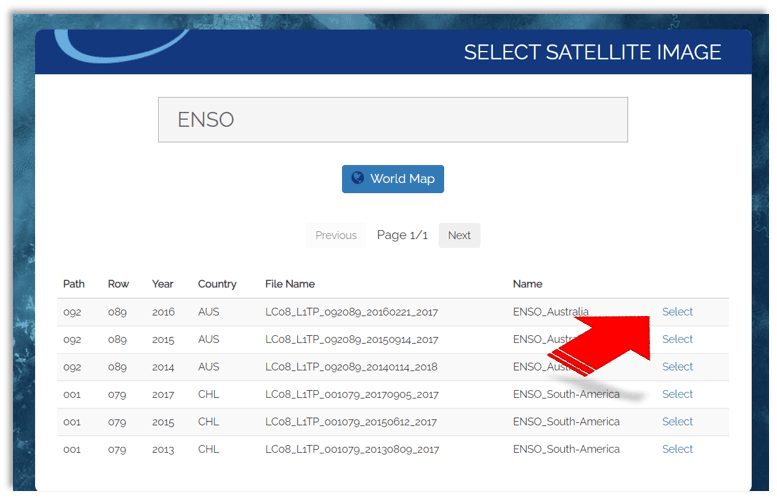
Using the ‘SELECT AREA’ button, we drag and drop the small square to the coastline.
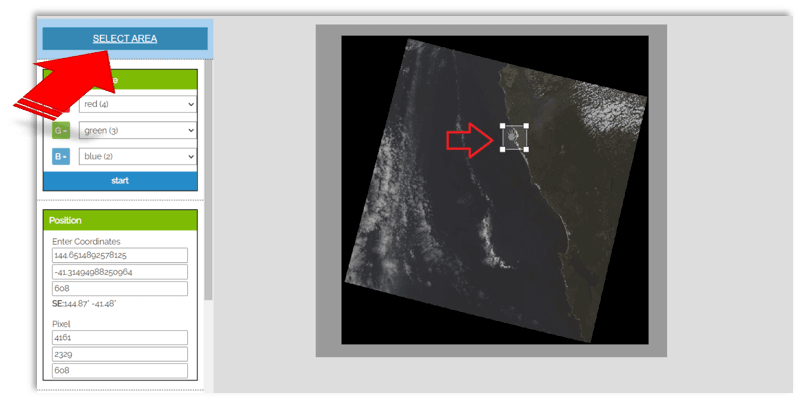
We specify the geographical coordinates in detail for the subsequent work steps:
Longitude Northwest: 144,70
Latitude Northwest: -41,28
and change the Width of the selected area to 700
Click on the ‘CROP’ button to load the image section:
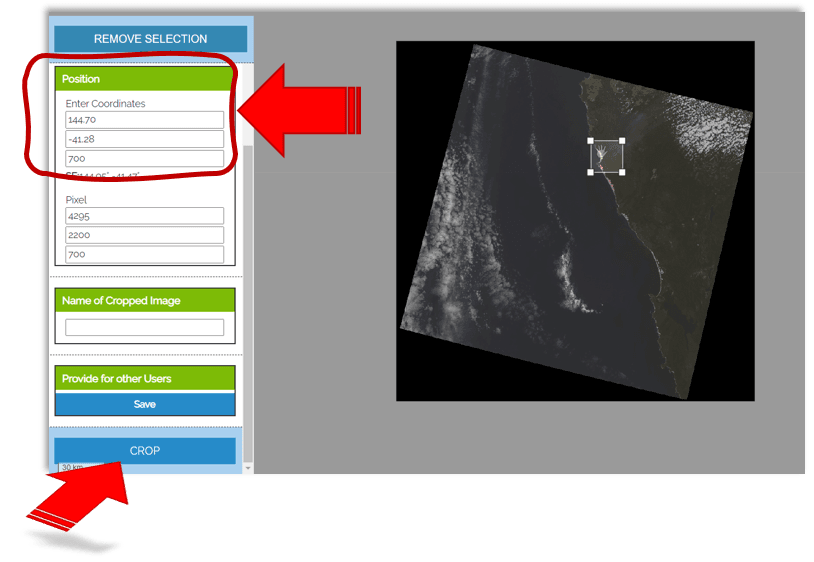
For an improved evaluation of the satellite image, you should correct the display of the image first. Perform the contrast enhancement.
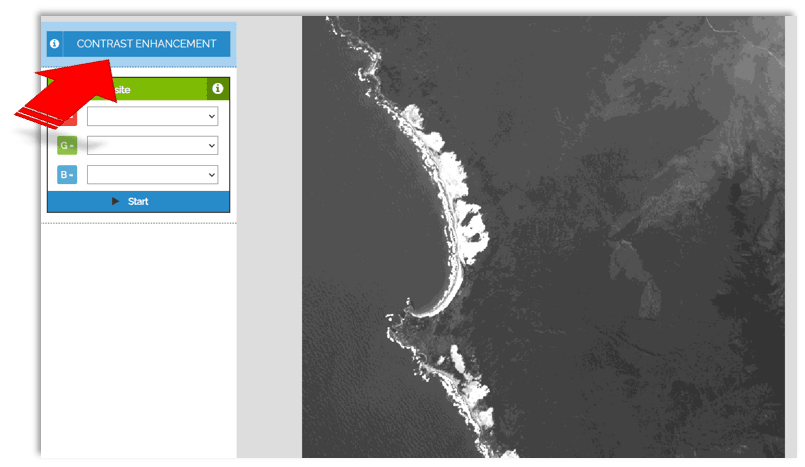
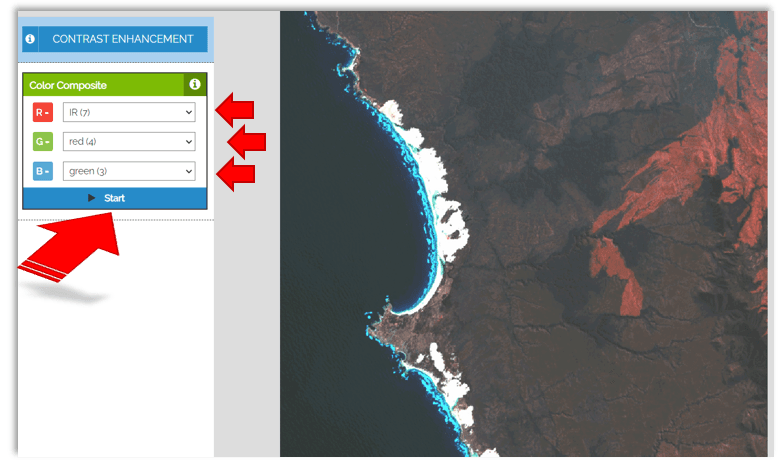
Healthy plants reflect the infrared part of the light spectrum differently than dead plants. False colours can therefore be used to examine the proportion of healthy vegetation in a particular area.
The colour channels are used to make this difference visible. If, for example, the infrared spectrum (IR) is selected for the red colour channel and the other two colour channels (green and blue) are swapped, then healthy plants appear reddish in the satellite image, as green plants reflect a particularly large amount of infrared light and absorb red light.
Click on the start button to visualise the differences with the naked eye.
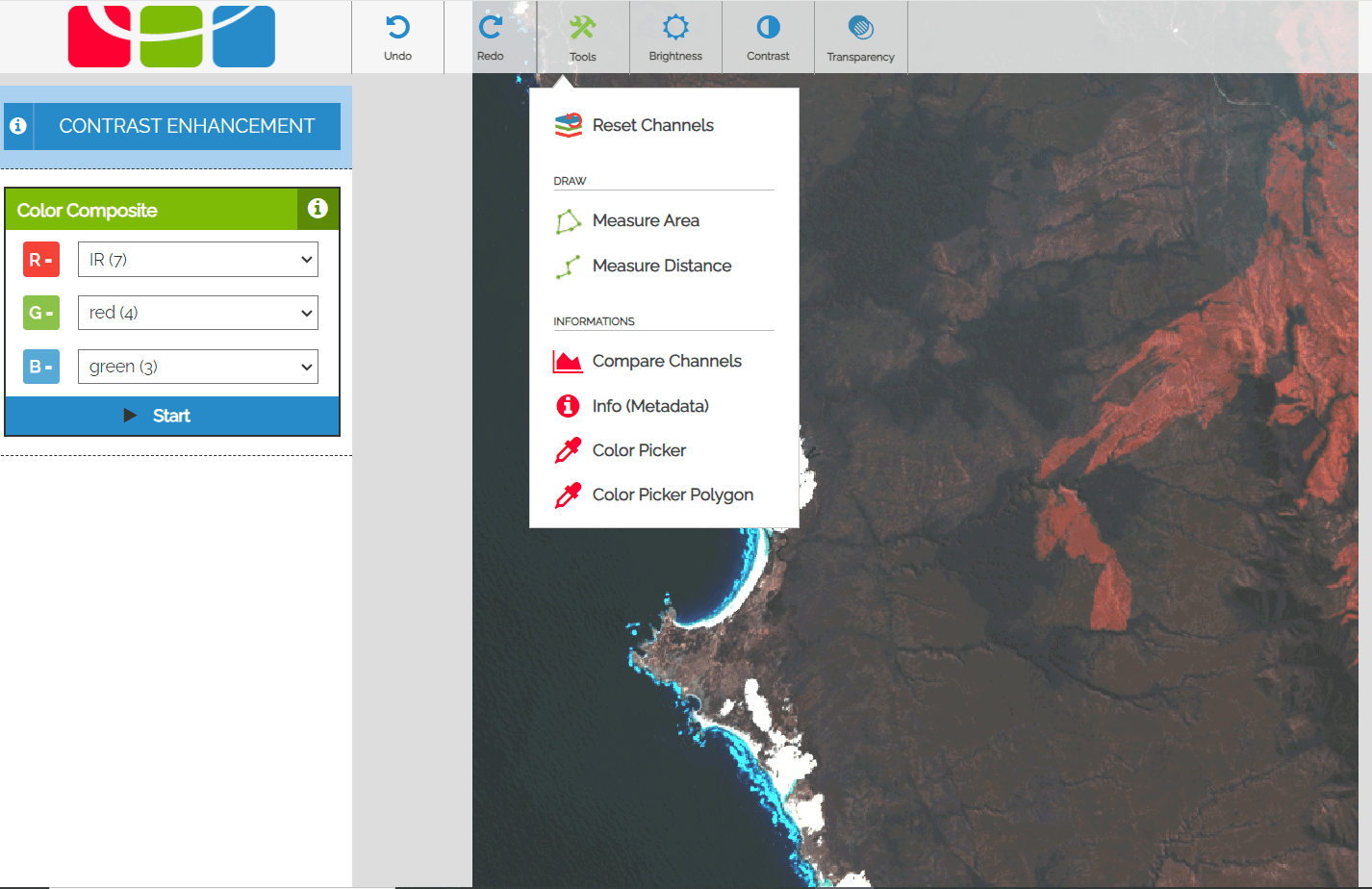
You can obtain even more information about an image by clicking on the ‘Tools’ menu.
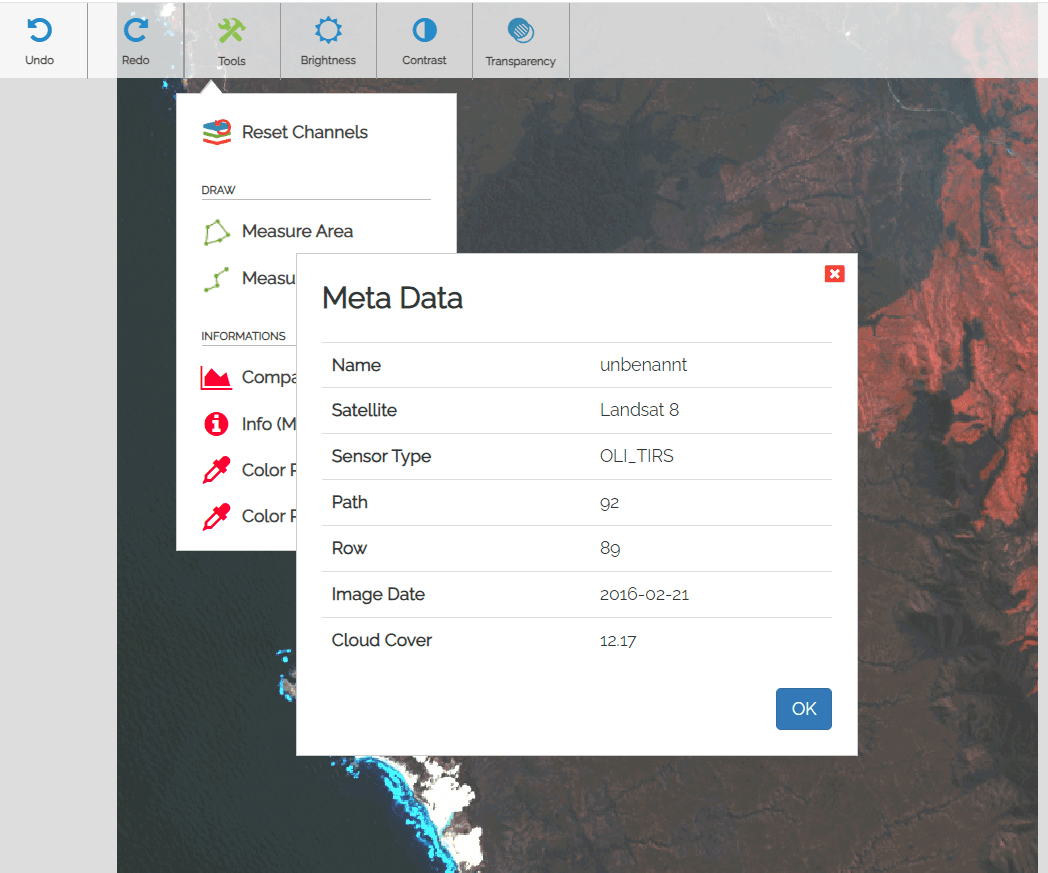
Here you will find information about the satellite (in our example: Landsat 8) and the date of the image:
You can use the ‘Measure area’ tool to determine the area of a specific region in the satellite image.
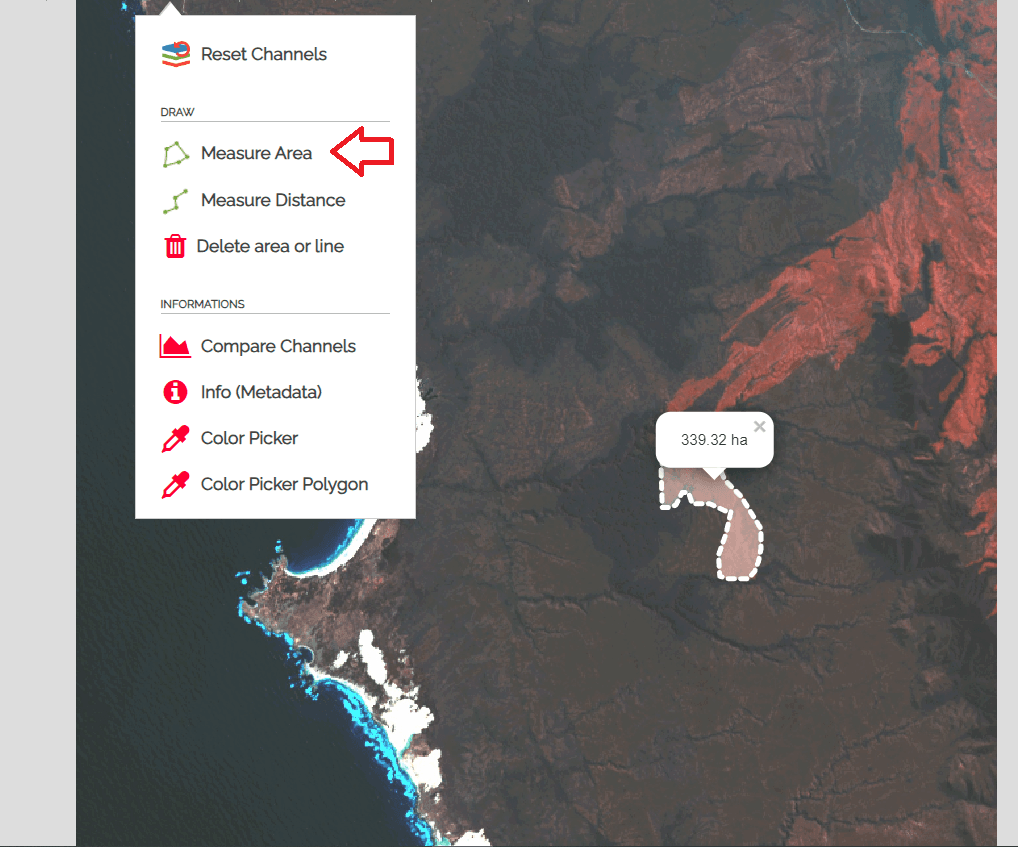
It would be nice if our pupils could now convert this area into square kilometres without the help of an online calculator (in our example, the area is around 339 ha) and estimate how this area relates to the area of a normal soccer field.
To help students get a good feel for converting units, you can take a look at our next lesson about Socrative.